epocrates: Drug Info & Pill ID
- 2.7
- Rating
- 1.00M
- Installs
- Free
- Price

 Analysis by App-foxy
When I need to check a medication name, compare a dose, or think through a possible interaction, I want an answer that is easy to find and easy to question. That is the role epocrates: Drug Info & Pill ID tries to fill. It is a medical reference app from Epocrates, Inc., aimed mainly at people who need drug information close at hand rather than a full replacement for a clinician or pharmacist.
I found its appeal strongest in short, practical moments: checking whether two medicines deserve a closer look, reviewing laboratory-related information, or identifying a tablet when the packaging is not immediately available. The app is free to install and is rated for Everyone, but some of its deeper material is connected to in-app purchases ranging from $12.99 to $224.99 per item. That distinction matters because the free starting point can feel useful, while a professional user may eventually want more than the basic experience.
What the app is really useful for
The store summary focuses on dosing, interactions, and labs, and that is a fair description of its practical center. I would treat it as a compact reference shelf: faster than searching through scattered web pages, more structured than relying on a general search engine, and more focused than a broad health app. The main benefit is not that it makes medical decisions for me. It gives me a place to organize a question before I decide what to ask a qualified professional.
You May Also Like

 Blood Strike: 2.5 Anniversary
Blood Strike’s Loadouts Turn Every Drop Into a Tactical Gamble
A close look at Blood Strike’s custom loadouts: how fast access to signature weapons reshapes its battle royale rhythm, rewards preparation, and narrows the gap between fights.

 Pandora - Music & Podcasts
Pandora’s Music Is Easy to Start, but Harder to Recover
Pandora’s strength is its low-effort path from a seed to a station. Its weak spot is how much confidence it asks you to place in connection, setup, and quiet recovery.

 8 Ball Pool
 Is Built on Rivalries, Rematches, and Routine
A close look at the rivalries, rematches, shared routines, and unanswered safety questions that turn a quick pool match into a persistent mobile community.

 Samsung Music
’s Quiet Strength Is Playing What You Already Own
Its reach comes less from spectacle than from dependable access to a personal library. That simplicity is both the app’s strongest retention engine and its ceiling.

 AccuWeather: Weather Radar
AccuWeather Review: A Quick, Clear Forecast for Everyday Decisions
For everyday plans, the best forecast is the one you can understand quickly. AccuWeather makes rain timing, radar, and local conditions easy to act on, with a few trade-offs.

 Hill Climb Racing
Why Hill Climb Racing Still Turns Crashes Into One More Run
A tiny car, a bumpy hill and one more upgrade: Hill Climb Racing keeps resurfacing because its simple chaos makes every near-miss feel personal.
More From Our News Desk



That difference is important. A drug reference can explain a medication, but it cannot see the complete patient history, current symptoms, allergies, examination findings, or every medicine being taken. I would never use a result from this app as permission to start, stop, split, or change a prescription. Its best role is to support a conversation, not to replace one.
For a person managing several prescriptions, the interaction area can be especially helpful as a prompt for further checking. The useful workflow is to enter or review the medicines carefully, read the explanation rather than stopping at a warning color or headline, and then confirm anything important with a pharmacist. A warning can indicate that a conversation is needed; it is not automatically a diagnosis of harm.
The laboratory material is another reason the app may appeal to students and healthcare workers. It can help connect a lab question with medication information instead of forcing a user to jump between unrelated references. I would still be cautious with personal results. A number only makes sense alongside the test range, timing, symptoms, medical history, and the reason the test was ordered.
A realistic everyday use
Imagine that I am preparing for a pharmacy visit and notice that a new prescription has a name I do not recognize. I can use the app to look up the medicine, note its general purpose, and check whether my existing list deserves a question about interactions. I can then write down the exact concerns and bring them to the pharmacist. That is a much safer use than searching for a side effect, becoming alarmed, and changing treatment without advice.
Pill identification can also be useful when a loose tablet turns up in a household medicine drawer. I would consider the result a starting clue only. A pill’s appearance can vary by manufacturer and region, and an uncertain match should be handled by a pharmacist or an appropriate poison-information service rather than treated as confirmed. The feature is valuable precisely when it leads to verification, not when it encourages guesswork.
Who will get the most from it
I see the strongest fit for medical students, nurses, clinicians, caregivers, and people who regularly need to prepare focused medication questions. A student may appreciate having drug information and lab references in one place. A caregiver may find it easier to review a family member’s medicines before a consultation. A professional may value a quick reference during a busy day, provided the app fits the person’s required level of detail and current workflow.
It is less suitable for someone looking for a simple symptom checker, a medication reminder, or a personal treatment planner. It is also not the right choice for a user who wants reassurance without reading context. Medication information often contains exceptions, cautions, and patient-specific details, so the app rewards careful reading more than rapid tapping.
Trust, controls, and the moments that require care
Trust is a complicated issue for a medical app. I do not judge it only by how polished the screens feel or how many medicines appear in search. I look at what the app lets me do, what choices are visible, and whether I can keep control of the decisions that matter. Epocrates, Inc. has been associated with this medical-reference product since its release on February 22, 2010, and the current version is 26.2.0. Its long presence and more than one million installs show that many people have chosen to use it, but popularity alone is not proof that every answer is right for every situation.
The public reception is mixed: the app has an average rating of 2.7 from around 26 thousand ratings, with roughly 5.5 thousand written reviews. I read that as a reason to test the experience personally rather than dismiss it or trust it automatically. A medical reference can be genuinely useful while still frustrating users through access boundaries, navigation issues, or differences between casual and professional needs.
The clearest control a user has is deciding how to use the information. I can search, compare, take notes for a discussion, and stop before acting. That sounds basic, but it is central to safe use. The app should sit beside a prescription label and professional advice, not above them. If a result conflicts with a doctor’s instructions, I would pause and ask for clarification instead of choosing whichever answer seems more convenient.
Account and purchase decisions deserve the same attention. Because the app is free but includes paid items, I would inspect the screen carefully before accepting any upgrade or subscription-style offer. I would want to know exactly what becomes available, whether the material is needed for my purpose, and how the purchase is managed through the relevant app-store account. A free download is not the same thing as a completely free reference library.
I also avoid treating a medical app as a private diary unless its controls clearly suit that purpose. Searching for a medicine can reveal sensitive information about a person’s health. I would use the device’s normal security protections, avoid sharing screenshots that expose medication names, and be deliberate about entering personal details. The safest habit is to provide only what is necessary for the task and to review any visible account or privacy choices before relying on the app regularly.
What happens when information is sensitive
There are three moments when I become especially cautious. The first is an urgent symptom after taking a medicine. In that situation, I would not spend time comparing app entries if emergency help or a clinician is needed. The second is a possible overdose or unknown pill. A reference result is not enough to establish safety. The third is a complex interaction involving several prescriptions, supplements, or medical conditions. That calls for a pharmacist’s judgment, even if the app presents a clear-looking result.
Another sensitive moment is when a user interprets a general warning as a personal prediction. Drug references describe known information, but the same medicine can affect people differently. I find the app more trustworthy when I use it to form precise questions: “Could this interact with my other prescription?” is better than “The app says this is dangerous, so should I stop?” The first invites professional review; the second risks turning a reference into an unauthorized treatment decision.
Parents and caregivers should also slow down. The Everyone rating describes the app’s content classification, not a promise that every medical decision is suitable for a child to make. A child’s age, weight, condition, and formulation can change dosing considerations. I would use the app to prepare information, then confirm pediatric questions directly with a qualified professional.
How it compares with ordinary alternatives
A general web search is quicker for broad questions, but it can mix reputable references with advertising, outdated pages, personal anecdotes, and results that are difficult to compare. This app’s advantage is concentration: it is built around medication reference tasks rather than the entire internet. That can reduce distraction, especially when I already know the medicine name or the question I need to investigate.
A printed drug handbook can be dependable and does not depend on a battery, account, or app interface, but it is less convenient to update and carry. A pharmacist remains better for applying information to a real person, because a pharmacist can ask follow-up questions and spot details that a search screen cannot. A medication reminder app may be better for schedules and adherence, while this app is better suited to information gathering.
That comparison also reveals the main trade-off. Epocrates can put several reference tasks in one mobile experience, but convenience may encourage overconfidence. The more serious the decision, the more I would move from app reading to human confirmation. I would choose a dedicated clinical database or an institution-approved reference when my work requires a specific editorial standard, access arrangement, or professional workflow that this app does not provide.
Practical habits that make it safer
I get more value from the app when I search with the exact medicine name and formulation rather than a vague description. Brand and generic names can differ, and similar-looking products can have very different ingredients. When checking an interaction, I review the complete list instead of testing only the two medicines I happen to remember. That small habit can expose the need to include an over-the-counter product or supplement in the conversation.
I also separate “information to discuss” from “action to take.” After reading an entry, I write down the medicine name, the question, and the reason it matters. I do not copy a dose into a personal plan without checking the prescription label and professional instructions. This makes the app useful during appointments without turning it into a self-prescribing tool.
For pill identification, I would photograph or inspect the imprint and physical details carefully, but I would not rely on a partial match. If the tablet is unknown, damaged, or found after a possible accidental ingestion, I would seek immediate expert help. The app can support the identification process, but uncertainty should end the process rather than produce a confident guess.
Finally, I would revisit purchase choices after using the free portion for my actual needs. A student may find the basic reference sufficient, while a professional might need additional depth. Since individual items can cost from $12.99 up to $224.99, I would compare the benefit with alternatives available through school, work, a library, or a professional organization before paying. That is not a criticism of the app; it is simply good control over a medical-information budget.
My cautious verdict
I recommend epocrates: Drug Info & Pill ID as a focused reference companion, especially for people who want medication, interaction, and lab information together. I like it most when it helps me prepare a better question, check terminology, or organize a conversation with a pharmacist or clinician. Its value comes from structure and convenience, not from giving me authority to make treatment decisions.
I would skip it if I wanted a reminder app, a diagnosis tool, or a completely friction-free source of free professional content. I would also be careful if the mixed rating reflects problems that affect my own device or workflow. Before depending on it in a clinical setting, I would test the searches I actually need, review the visible account and purchase choices, and confirm that the available information meets my professional requirements.
My bottom line is simple: use it as a question-building tool, not as a substitute for medical judgment. With that boundary in place, the app can be a practical addition to a medicine cabinet, study routine, or healthcare workflow. Without that boundary, even a well-organized drug reference can be misused. That balance is why I see it as useful, but only for a reader willing to verify important answers and stay in control of every decision.
FAQs for epocrates: Drug Info & Pill ID
01What features does Epocrates offer for healthcare professionals?
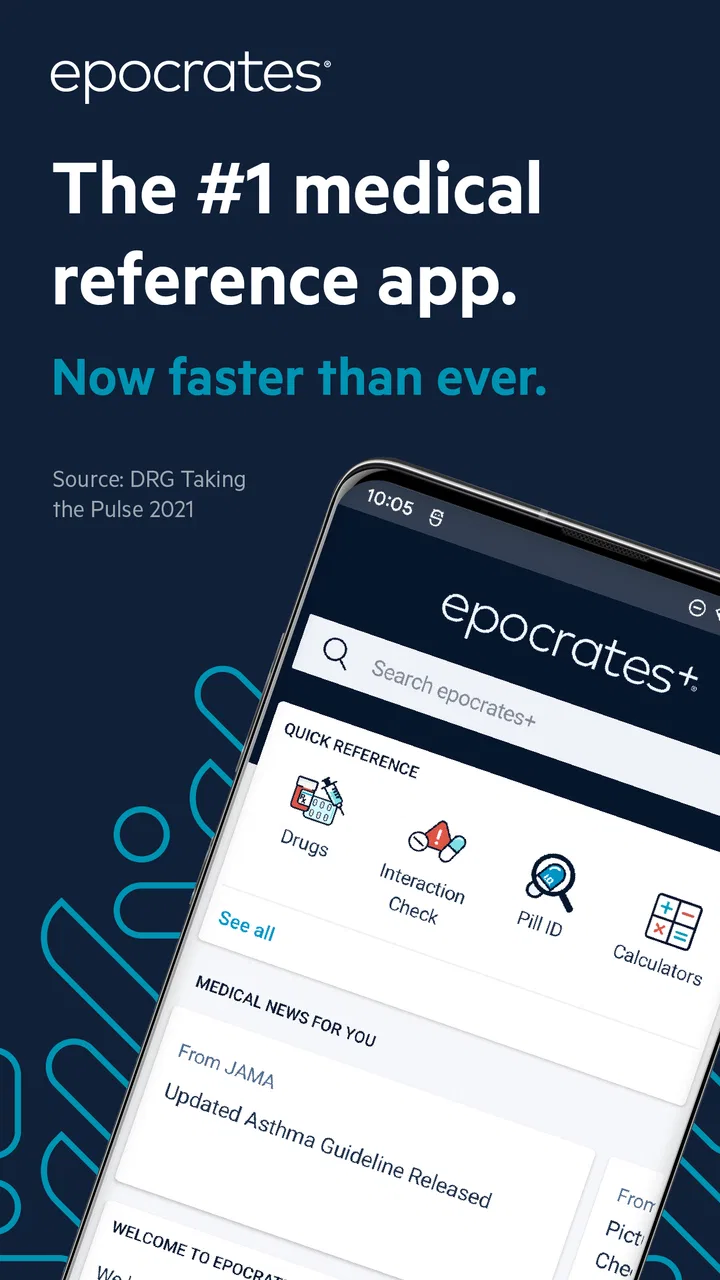
Epocrates provides a comprehensive suite of tools for healthcare professionals, including drug information, a pill identifier, interaction checker, and medical calculators. The app also offers clinical guidelines and disease information. With its user-friendly interface, it serves as a reliable resource for making informed clinical decisions quickly and efficiently.
02Is Epocrates available for both Android and iOS devices?
Yes, Epocrates is available for both Android and iOS devices. Users can download the app from Google Play Store for Android or the Apple App Store for iOS. This cross-platform availability ensures that healthcare professionals can access valuable medical information on their preferred devices at any time.
03Does Epocrates require an internet connection to function?
Epocrates primarily requires an internet connection to download updates and access some online features. However, many of its core features, such as drug information and interaction checker, can be accessed offline once the necessary data is downloaded. This makes it convenient for use in settings with limited connectivity.
04Are there any subscription fees associated with using Epocrates?
Epocrates offers both a free version and a premium subscription called Epocrates Plus. The free version includes essential features like drug information and a pill identifier, while Epocrates Plus provides additional resources such as alternative medicine information and disease guidelines. Users can choose based on their needs and budget.
05How reliable is the information provided by Epocrates?
Epocrates is renowned for its accuracy and reliability, as it sources information from trusted medical databases and is regularly updated by healthcare professionals. It is widely used by clinicians for its credible drug information and clinical tools, making it a dependable app for medical decision-making.
Pros
- Comprehensive drug database available.
- User-friendly interface with intuitive navigation.
- Accurate pill identification feature.
- Regularly updated clinical guidelines.
- Time-saving interaction checker.
Cons
- Requires internet for most features.
- Subscription needed for premium content.
- Limited offline functionality.
- Not all features available in all regions.
- Occasional slow load times.

epocrates: Drug Info & Pill ID
Gallery